How to Retire Before You’re 50 in 7 Straightforward Steps
The average retirement age in the UK is constantly rising, currently standing at 65 years and set to rise to 70 over the coming decade. Many factors contribute to this extension of our working lives. As with most industrialised nations, the population is ageing rapidly (although nowhere near as quickly as in most other European nations), which in turn means there is less money available to fund pensions and social safety nets.
The result is that the majority of the workforce must stay working for longer in order to meet the growing demand for contributions. The fact that life expectancy continues to increase in the UK means that this issue will not be abating anytime soon. Younger people today are slowly resigning themselves to the fact that they may well be working well into old age, leaving less time to enjoy the sweet bliss of retirement.
However, this needn’t be the case. There is an emerging movement in the UK and America known are Financially Independent, Retire Early (FIRE), whose adherents aim to retire while still in the bloom of youth. Many of the most prominent public faces of this movement tend to already earn six-figure salaries, which of course makes it significantly easier to retire early.
However, you don’t need a hefty pay packet in order to tap out of the rat race early. All you need is the right strategy. Here’s how you can start your path to early retirement right now.
1. Figure out How Much You Need
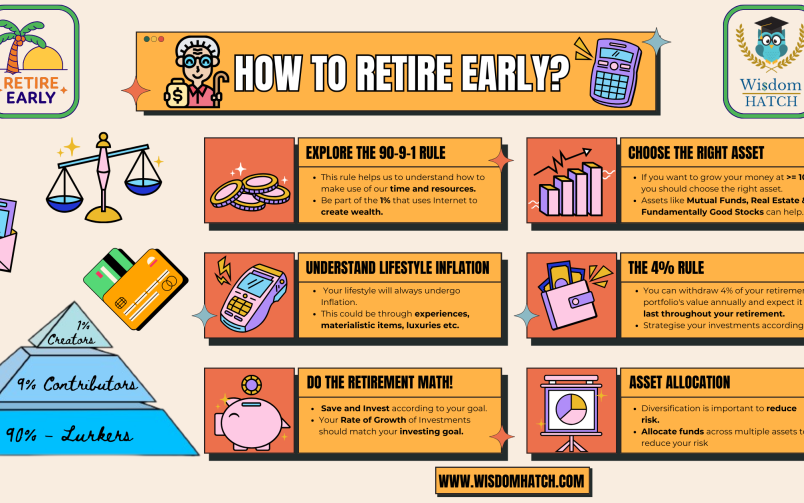
The first step is to take stock of your current assets and figure out how much capital you need to accumulate in order to stop working for good. To do this, you’ll need to decide what age you’re going to retire, how much in annual expenditures will be required to maintain your standard of living, and how far you are towards that goal.
The quickest way to figure out how much you’ll need is to divide your anticipated annual expenses by your so-called “target withdrawal rate”. For example, if you’re planning on withdrawing 2% from your savings pot every year to fund a £50,000-a-year lifestyle, then you’ll need £2.5 million to retire. To factor all your financial nuances into the equation, use this handy free retirement calculator from Nerd Wallet.
2. Start a Progressive Savings Plan
Many FIRE adherents claim to save anything between 50-90% of their total income every year in pursuit of the retirement goals. This may seem a little bit extreme and can be an almost impossible adjustment to make in one go.
Instead, piece together a progressive savings plan which involves you gradually saving up a greater proportion of your income. Increase this amount every 1-6 months until you’ve adjusted your spending habits to a point where you can actually save a substantial amount of your earnings without too much of a struggle.
3. Low-Risk, Low-Yield Investments
Anyone hoping to retire early needs a portfolio. Your investments will be the main vehicle through which you are able to pay yourself in retirement, so it’s important to start making your money work for you as early as possible.
Rather than going for stocks and dividends that promise high returns in exchange for greater risk, always opt for a more conservative portfolio. Low risk, low yield options such as stocks and bonds, ideally with a 60-40 stock to bond ratio. Anything else isn’t worth the risk, at least not in the long term.
Source: Pixabay
4. Stop Paying for Recreation
Now it’s time to talk about actual lifestyle adjustments. You don’t need to start living the life of a monk as the price for fiscal responsibility. Your younger years are for living and there’s no reason why having a good time and having a secure early retirement are mutually exclusive prospects. All it takes is a little bit of know-how.
For starters, anything you enjoy doing and are willing to pay money to do can likely be done for free – or at least cheaper. Even traditionally high-spend recreational activities like casino games can be enjoyed without you spending a penny. A handy guide from Oddschecker highlights a number of platforms where you can play real-money slot games without paying so much as a deposit or where you can make an initial sum go further. If that doesn’t demonstrate that you can have fun for free, nothing will.
5. Start Cutting, Don’t Stop
There is always room in your life to trim the fat, no matter how conservative you think your spending habits are. An obvious place to start is with food. If you’re eating out for lunch at work every day, even if you’re just popping into Tesco to grab a meal deal, you’re still spending hundreds of pounds a year. That’s tens of thousands of pounds over your lifetime.
Simply pack a homemade lunch and if you must spend money on eating out, do it on experiences that are more valuable than a desk sandwich, like an occasional dinner with friends or your partner. This logic applies to every area of your life. Don’t splurge on a new dress when you already have some sitting in your wardrobe, don’t spend hundreds on a weekend away to a nearby city, and don’t resign yourself to spending £100 on a bog-standard night out.
6. Ditch the Car
This one is a little less abstract than the others but bears mentioning just as much. In the UK, the average car driver spends a whopping £388 a month on their automobile. A lifelong driver will, therefore, have poured an astonishing £232,800 into their whip by the time they reach retirement age.
Unless you are for some reason doomed to live in the remote countryside for the entirety of your life, it doesn’t have to be this way. Simply moving within cycling distance of your work and amenities can literally save you hundreds of thousands of pounds that should be being put to use in your race to retire.
Source: Pixabay
7. Get Smart with Taxes
You may think HMRC is after your hard-earned cash, but they actually want you to save. The last thing the government wants is to foot the bill for the millions of people who have nothing saved for retirement, which is why they offer plenty of lucrative tax-efficient vehicles and incentives to those who are willing to be responsible.
Check out HMRC’s tax schemes for private pension contributions to see how you can be making your savings as efficient and useful as possible. Fine-tuning your assets is the key way to retiring early, and making the most of tax incentives is a hugely effective way of doing this.
Ultimately, your saving journey all comes down to you. It’s not just about saving savvy and personal willpower but also depends on your own hopes and dreams. You need to visualise what you’re aiming for and remind yourself why you want to retire early. After all, life is for living, not working.